In 2024 I participated in the All About That Place challenge presented by the Society of Genealogists. This international event focused on place-based research, and I was excited that a presentation based on my One Place Study (OPS) of Lichten/Lichnov exploring the expulsion of the German population after WW2 as told through the story of my great-grandfather Franz Schmid was chosen for inclusion. What I love about OPS is the combination of family and local history. An OPS allows you to examine people and family groups in their community. I love the idea of studying my family members and the community they lived in and learning about the local and national events that impacted their lives. It is about gaining an understanding of the events that shaped the community and the lives of the people living in it.
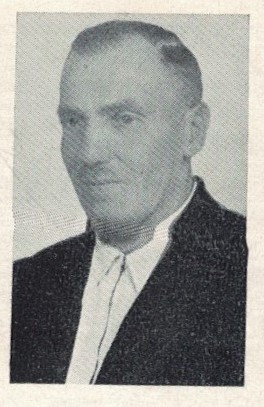
August 27th, 2026, marks the 80th anniversary of Franz’s expulsion from the village his family lived in for more than 500 years. Since neither Franz nor my grandmother was able to return to the village during their lifetimes (remember the former Czechoslovakia was a communist satellite state until 1989) I thought this anniversary was a perfect time to visit the village myself. If my grandmother and her father were unable to return at least I could complete the journey.
I hired Martin Kočařík of My Czech Roots https://www.myczechroots.com/ to assist me in my journey. Martin had completed some research and translations for me over the years, and I knew he was the best choice to assist me. On the appointed day Martin met me at the train station in Olomouc and from there we made the 60km journey by car. I had done my research and had a list of places I wanted to see in the village. Martin had arranged for us to meet Jan, the local historian who graciously spent the day with us and helped us navigate the village and meet some of the locals.
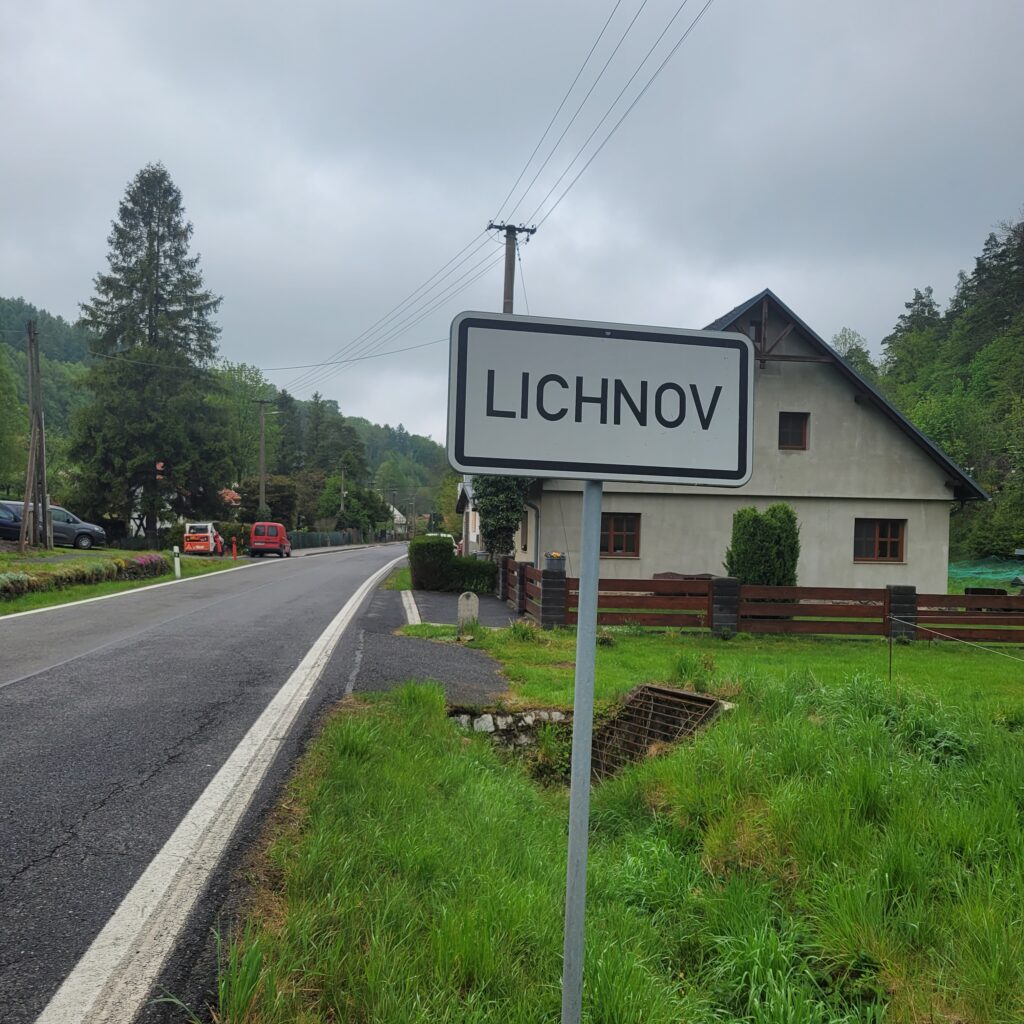
Lichnov is in the in the eastern part of the Czech Republic in the Moravian-Silesian Region only 12 km from the border with Poland. Lichnov dates to the last quarter of the 14th century although there are written references to the village as early as 1320. Prior to WW2 the village was known by its German name Lichten and was populated predominately by German speakers. This cadastral map shows how the village grew along the Cizinz River which flows through the village. Historically it has been a small village and even today the official website notes there are only1044 permanent residents.

From the information contained in Franz’s application for compensation for loss of property which he filed in 1953 I knew on September 1, 1939, Franz was living in Lichnov in house #231 which he had purchased from his parents in 1933. He describes the house as wooden, built in 1880, with a slate roof and 50 sq. meters of living area including a kitchen and a room designated as living space. Unfortunately, I could not find any information on the house on Mapy.com and Jan did confirm that records indicate the house was destroyed in 1945. This aligns with what Franz noted in his application that the damage and loss of his property occurred on May 4, 1945, and was the result of aggression by the Russians and Czechs. In the application Franz provides a detailed list of the possessions he lost including a total loss of furniture, 2 beds, crockery, kitchen equipment, sewing machine, 2 bicycles and 80% of their clothing. He also noted the loss of 1100 RM in savings held in a bank.
I then turned my attention to house #239 in which my grandmother was born and spent her childhood. Fortunately, the house was still standing and Jan arranged for me to meet the current owners who graciously invited me inside. It is hard to describe the emotions I felt standing in that doorway and looking out on the same vistas my grandmother looked out on 100 years before. In a sense all the stories she told me of playing in the meadows and roaming the hills of the village came back to me and I could hear her voice as if she was standing beside me. I spent my career working at a local history museum and I remember my grandparents coming for a tour of the historic house. Upon entering the house my grandmother remarked that it was very similar to how she lived in her childhood – very rustic and with very few conveniences – no hot running water, a privy out back and no central heating.
There was a large German population in the town until 1946 when ethnic Germans were expelled after the Potsdam Conference. Population records reveal a decline of 675 individuals living in Lichten between 1939 and 1950. The 1930 census indicates over 2000 residents of the 2077 total population considered themselves to be ethnic Germans so the expulsion would have had a major impact on the composition of the town. My great grandfather and his family were some of those expelled as part of this order. They never returned to their home in Czechoslovakia. By 1950 the country was a communist satellite state and the town was known by its Czech name Lichnov.
According to the Lichnov village chronicle, the first expulsions of Germans began in early 1946. There were 10 expulsions throughout the year. In all more than 1300 Germans were removed from the village. Franz noted in his compensation application he and his family were expelled on August 27, 1946. What happened to Franz and their family between the seizure of their property in May 1945 and their actual expulsion in August 1946 is unknown. The chronicle states that some Germans were secured in the days after the War and would return to the village at the time of their expulsion so entire families would be expelled together. Although there were no weight restrictions on the amount of luggage the Germans were allowed to carry, most of their possessions were already seized in the year prior. The chronicle notes the official slogan for the expulsions was “Let them take what they want, just take them out.” On their appointed date, the Germans were assembled in the school building and taken by wagons to Bruntal and from there would make the journey to Germany by rail, foot, or cart.

Today many towns and villages in the Czech Republic attempt to come to terms with historical events in the spirit of reconciliation. Lichnov opened a museum of Czech-German history which was a joint project of the displaced and current residents. The museum was opened in 2009 in the former home, of one of the owners of a local knitwear factory.
Years after the expulsion my grandmother was asked by a neighbour about her feelings surrounding the events post WW2. After considering the question for a moment she replied, “We never thought they (the Czechs) would do this. We thought they were our friends.” That was the only time I heard my grandmother comment on this chapter of her life. So 80 years later I am writing this blog post to commemorate my great grandfather, my grandmother and all the other expellees who were caught in the aftermath of the War in what historian R.M. Douglas calls “the largest forced population transfer and perhaps the greatest single movement of peoples in human history.”